
African safari souvenirs: What to Buy in East Africa
African Safari Souvenirs are most meaningful when they support local makers. Our 2026 guide covers Maasai beadwork, Rwanda baskets, Zanzibar spices and ethical market tips.
21 min read10views
“Imara” means strongin Swahili. We build every safari with that same strength — expert knowledge, honest pricing, and relentless attention to detail.
Tell us what you're looking for and we'll build a custom itinerary — free, no obligation, within 24 hours.
Start PlanningNo spam, ever. Unsubscribe anytime.
Protected by Cloudflare Turnstile & Google reCAPTCHA. Privacy & Terms apply.
Safari deals, travel tips & destination guides — straight to your inbox.
No spam, ever. Unsubscribe anytime.
Protected by Cloudflare Turnstile & Google reCAPTCHA. Privacy & Terms apply.
African Safari Souvenirs are most meaningful when they support local makers. Our 2026 guide covers Maasai beadwork, Rwanda baskets, Zanzibar spices and ethical market tips.
Quick answer
Stepping off a dusty game-drive vehicle and into the vibrant, sensory world of an East African marketplace is an unforgettable part of your journey. The air is thick with the scent of roasted coffee, cedarwood, and drying spices, and the stalls overflow with colours that mirror the landscapes you have spent your days exploring. For first-time travellers, knowing what to buy on safari can feel overwhelming amidst the sheer variety of crafts on display. The most meaningful keepsakes are always those that tell a story of the hands that shaped them and the wildlife-rich landscapes that inspired them.
When planning your shopping, a concise list of high-quality items is invaluable. Focus your attention on traditional Maasai beadwork, vibrant kitenge or kanga textiles, whimsical tinga tinga paintings, aromatic Zanzibar spices, intricate Rwanda woven baskets, and rich Ugandan coffee. Each of these items represents a distinct cultural thread. The strongest souvenirs are intimately tied to your actual travel route, whether you are embarking on a classic Kenya Big Five Safari, a dramatic Serengeti migration crossing, a gorilla trek in the rainforests, or a relaxing beach extension on the spice islands of Zanzibar.
Timing your shopping is also key to preserving your safari experience. As of 16 June 2026, Kenya and Tanzania are entering the main June–October dry safari season; the Masai Mara’s busiest Great Migration months are usually July–October. During these thrilling peak months, your days will be packed with dawn-to-dusk game drives. To ensure you do not cut into these prime wildlife-viewing hours, we recommend planning your shopping on arrival, during departure days in major hubs like Nairobi or Kigali, or during relaxed rest afternoons at your lodge.
Each country in East Africa boasts its own unique artistic heritage, shaped by local materials, ancient traditions, and contemporary community initiatives. Understanding what each region excels in makes it much easier to find authentic treasures while supporting local livelihoods. From the semi-arid northern reaches of Kenya to the tropical slopes of Uganda, the diversity of craftsmanship is astonishing.
In Kenya, the focus is heavily on exquisite Maasai beadwork, tactile Kisii soapstone carvings, hand-woven kiondo baskets made from sisal and leather, and the iconic plaid shuka blankets. Tanzania offers the distinctive, glossy tinga tinga paintings, expressive Makonde woodcarvings sourced from reputable galleries, and premium arabica coffee grown on the volcanic slopes of Mount Kilimanjaro. Rwanda is famous for its elegant, lidded agaseke baskets and geometric imigongo art made from organic materials, while Uganda excels in rich barkcloth creations, robust coffee beans, and beautiful banana-fibre crafts.
To help you plan your packing space and budget, we have compiled a quick-reference guide to the best regional keepsakes:
Typical 2026 East Africa market planning ranges are about US$3–10 for beaded bracelets, US$10–25 for shukas or kangas, and US$20–80 for medium woven baskets. Keeping these baseline figures in mind will help you budget your cash and ensure you are paying a fair price that respects the artisan's labor.
As premium safari operators, we believe that travel should actively benefit the communities and ecosystems we visit. Ethical safari shopping is the practice of purchasing traceable, locally made goods that return money directly to the artisans, women’s co-operatives, or community conservation projects. When you buy ethically, your purchase becomes a force for good, providing sustainable income that can deter poaching and support local education.
Before making a purchase, we encourage our guests to ask three simple questions: Who made it? Where was it made? What material is it made from? If a seller cannot tell you who crafted the item or where the materials were sourced, it may be a mass-produced import. Be particularly vigilant against cheap, imported lookalikes that flood major tourist hubs, as well as items carved from endangered hardwoods or sold as "fake antiques" designed to deceive buyers.
“"The best souvenir is one that supports a family and protects a landscape. When you buy a beaded bracelet from a Maasai women's co-operative, you aren't just buying a piece of jewellery; you are paying for school fees, clean water, and the preservation of a cultural heritage that has coexisted with wildlife for centuries." — Imara Africa Safaris Guide Tip”
Our experienced guides are always on hand to act as your practical helpers. They can suggest reliable, fair-trade stops along your route without ever forcing you into commission-heavy shops. We pride ourselves on guiding our guests to authentic workshops and community-run centres where your money goes directly to the creators.
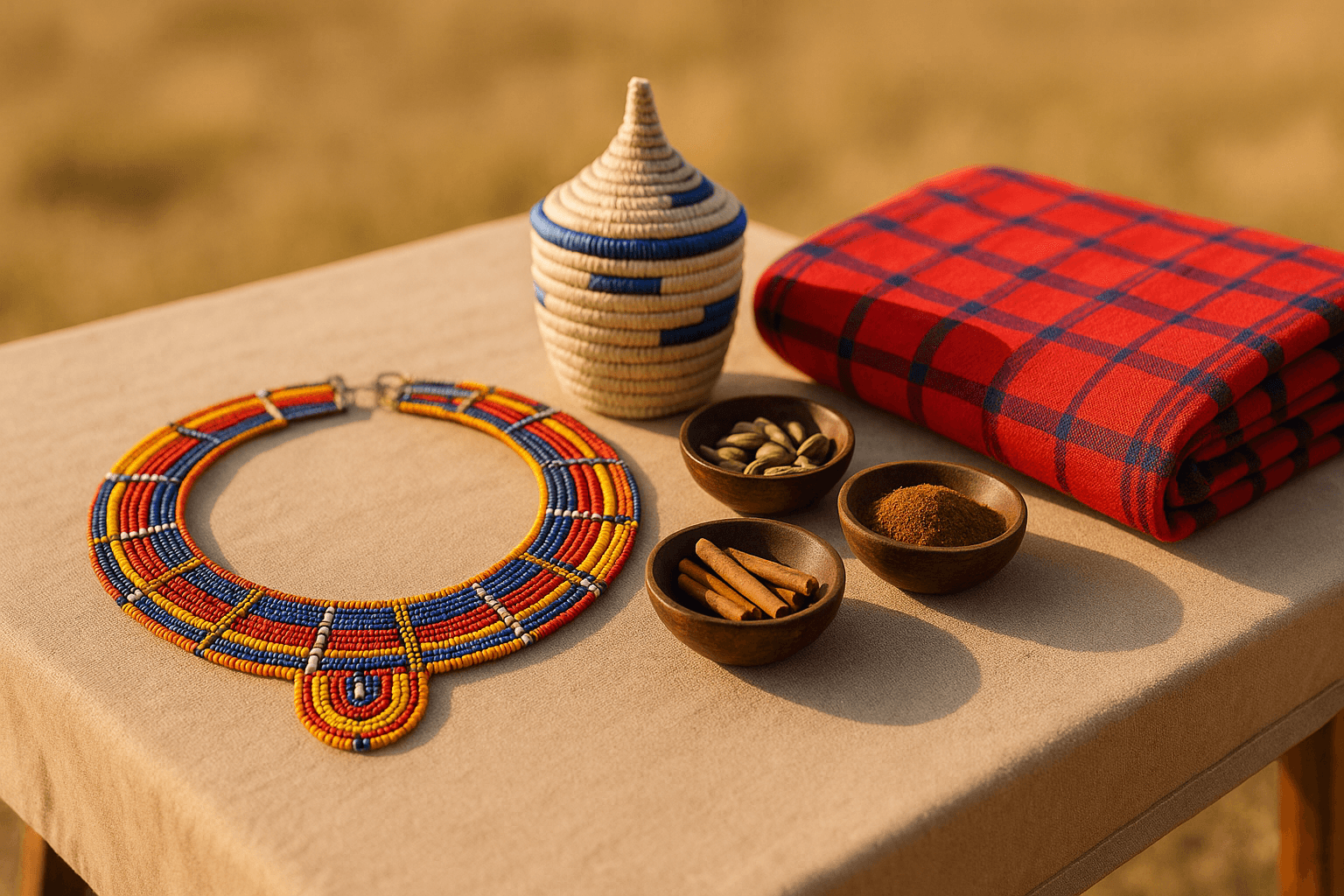
Kenya is a treasure trove of handmade souvenirs Kenya visitors fall in love with. Among the most iconic are the vibrant Maasai beadwork pieces. Traditionally, this intricate work is crafted by women who gather under the shade of acacia trees, threading tiny glass beads onto leather or wire. Each piece is a masterclass in geometry and patience. Beaded bracelets, wide collars, and embellished leather belts make spectacular, lightweight gifts that carry the spirit of the savannah.

Beyond the beadwork, look out for Kisii soapstone carvings. Sourced from the hills of western Kenya, this soft, heavy stone is mined, carved, and polished entirely by hand into smooth bowls, animal figurines, and minimalist sculptures. You will also find beautiful kiondo baskets—durable hand-woven bags made from sisal and frequently finished with fine leather straps—and soft, warm shukas, the traditional red-and-blue plaid blankets worn by Maasai warriors.
If you are wondering what souvenirs to buy in Kenya and where to buy souvenirs Nairobi visitors can realistically fit into their itineraries, the capital city offers excellent options. The bustling Maasai Market Nairobi moves to different locations throughout the week, offering a vibrant, high-energy shopping experience. For a more relaxed, fixed-price environment, we highly recommend Kazuri Beads, a social enterprise that employs hundreds of single mothers to hand-craft and paint ceramic beads. For those searching for traditional leatherwork and woven baskets, Kariokor Market is an excellent wholesale hub where you can watch artisans at work.
Visiting the world-famous Masai Mara safari fields is a highlight of any East African journey. The region is home to the Maasai people, whose rich culture is deeply intertwined with the wildlife. When looking for souvenirs from masai mara, look for bead-trimmed leather pieces, small woven milk gourds, and striking brass jewellery crafted by local women's groups. Buying these items directly from community-owned stalls or curated lodge shops ensures that the financial benefits of tourism flow directly back to the conservancies.


 KE
KEKenya · Masai Mara National Reserve
For travellers on a masai mara safari africa adventure, we advise purchasing items after an organized community or village visit, but only where shopping is clearly invited and prices are transparent. It is always best to buy directly from the artisan whenever possible. This direct interaction adds a wonderful personal memory to your keepsake, transforming a simple beaded bracelet into a reminder of a shared smile.
Masai Mara National Reserve covers about 1,510 km² and Serengeti National Park covers 14,763 km², so multi-stop safari days leave little room for bulky shopping unless planned in advance. Our guides are experts at building relaxed shopping stops into your broader Kenya safari route—whether you are traveling between Lake Nakuru, Amboseli, Ol Pejeta, or Nairobi—ensuring you never feel rushed or burdened by heavy packages during game drives.
Tanzania offers a wealth of handmade souvenirs tanzania artisans craft with incredible skill. One of the most joyful items to bring home is a Tingatinga painting. Originating in Dar es Salaam in the late 1960s, this unique art style features bold, cartoon-like depictions of wildlife painted in glossy enamel on canvas. Because they can be carefully removed from their wooden frames and rolled into protective cardboard tubes, they are incredibly easy to transport.

 TZ
TZTanzania · Serengeti National Park
When searching for Tanzania safari gifts after exploring the Serengeti or Ngorongoro Crater, look for light, durable items that can survive the dust and movement of lodge transfers. Beautifully carved wooden serving spoons, small beaded sandals, and hand-woven kanga cloths—lightweight cotton wraps featuring printed Swahili proverbs—are perfect choices. They capture the warmth of Tanzanian hospitality without taking up precious space in your luggage.
If your itinerary includes a beach extension, Zanzibar spices souvenirs are an absolute must. The historic Stone Town and the bustling Darajani Market are filled with the rich aromas of cloves, cinnamon, vanilla, nutmeg, and cardamom. Opt for sealed spice tins or beautifully packaged gift boxes that are easy to pack and clear through international customs. While exploring the coast, please be highly vigilant and avoid buying any shells, coral, or unlabelled marine products, as harvesting these severely damages the delicate reef ecosystems.
For a seamless combination of wildlife and coastal culture, many of our guests choose a tailored Serengeti and Zanzibar itinerary, which provides the perfect balance of dusty savannah game drives and relaxed spice-market shopping.
Rwanda’s craft scene is characterized by refinement, precision, and an inspiring spirit of community resilience. The country’s most famous export is Rwanda woven baskets, specifically the agaseke. These beautiful, lidded baskets feature a distinctive pointed shape and are woven from fine sisal fibres and sweetgrass. Historically used to hold dry foods or gifts for weddings, they now serve as stunning decorative pieces. Because they are light and can be nested inside one another, they are remarkably easy to pack.

 RW
RWRwanda · Volcanoes National Park
Another uniquely Rwandan treasure is imigongo art. Traditionally made by women using cow dung mixed with ash to create raised geometric ridges on wooden boards, these pieces are painted with natural black, white, and red pigments. Today, local co-operatives produce modern variations of these striking geometric patterns that make for exceptional wall art. When shopping in Kigali, we love guiding our guests to the Nyamirambo Women’s Center and the bustling Kimironko Market, where you can purchase high-quality, handmade clothing, tote bags, and home decor directly from the women who sew them.
If you are heading north to Volcanoes National Park, your purchases can directly support primate conservation. Look for hand-carved wooden mountain gorillas, embroidered textiles, and conservation-themed books sold at community centres near the park. Buying these items provides vital alternative livelihoods for former poachers and local communities, helping to safeguard the future of the endangered mountain gorillas.
Uganda, often called the Pearl of Africa, offers a distinct selection of Uganda safari souvenirs that are deeply rooted in the country's natural wealth and ancient kingdoms. One of the most fascinating materials you will encounter is Ugandan barkcloth. Sourced from the inner bark of the Mutuba tree (Ficus natalensis), this ancient textile is harvested without harming the tree, which then grows a new layer of bark. The resulting earthy, terracotta-coloured cloth is used to create unique paintings, book covers, and cushion covers that are incredibly lightweight and durable.

 UG
UGUganda · Queen Elizabeth National Park
Uganda is also world-renowned for its exceptional coffee. Both robusta (which is indigenous to the lake basin) and high-quality arabica grown on the slopes of Mount Elgon make fantastic gifts. Purchasing packaged, roasted beans from local social enterprises directly supports smallholder farmers. You can also find beautiful banana-fibre crafts, including intricately folded greeting cards, mobile decorations, and small woven placemats that capture the lush, green essence of the country.
If you are embarking on a Bwindi gorilla trekking adventure, make sure to visit the community craft shops located just outside the forest gates. Here, local women's groups sell hand-woven baskets and carved wooden walking sticks. When purchasing plant-based crafts, coffee, or spices, always keep your receipts handy. Having official shop receipts makes it much easier to clear agricultural inspections when flying back home through strict biosecurity countries like the UK, Australia, or the US.
One of the most important practicalities of planning an East African safari is managing your luggage weight. Many East African fly-in safari routes limit luggage to 15 kg (33 lb) per person in soft-sided bags, making jewellery, textiles, spice tins and rolled art more practical than carvings. If your itinerary involves small light aircraft hopping between remote bush airstrips, bulky or heavy items simply cannot be accommodated in the limited cargo pods.

To avoid any stressful airport repacking, we recommend prioritising lightweight, flexible, and unbreakable items. Beadwork, cotton scarves, small nested baskets, flat-packed spice tins, and rolled canvas paintings are ideal. If you know you want to shop for larger items, we suggest leaving 2–3 kg of spare space in your soft duffel bag before you depart home.
If you do fall in love with a larger piece—such as a large Makonde wood carving or a heavy soapstone sculpture—we recommend purchasing it only from established galleries or larger shops that offer reliable, insured international shipping services. Always keep your receipts, business cards, and material declarations safely tucked inside your passport holder for easy access at customs.
Protecting the incredible wildlife of East Africa is at the very heart of what we do. As a responsible traveller, it is vital to know which items to avoid completely. CITES regulates international trade in more than 40,000 wild animal and plant species; avoid ivory, rhino horn, tortoiseshell, coral, wild skins, teeth, claws and feathers. Purchasing any of these items—even if a local vendor claims they are "antique" or "sourced legally"—is highly illegal and carries severe penalties, including hefty fines and imprisonment.

It is also important to be aware of local environmental laws. Kenya’s plastic carrier-bag ban has been in force since 28 August 2017; Rwanda introduced a polythene-bag ban in 2008 and Tanzania followed on 1 June 2019. When shopping at East Africa craft markets, do not accept single-use plastic carrier bags. Instead, we highly recommend carrying a reusable cloth tote bag or a traditional woven basket with you for your purchases.
Additionally, be mindful of food and plant restrictions when returning to your home country. Sealed, commercially packaged spices and roasted coffee are generally easy to clear through international customs. However, loose seeds, fresh plant material, unlabelled powders, or raw honey are frequently confiscated by agricultural border control. Always check your home country's specific customs import rules before purchasing agricultural souvenirs.
Knowing where to shop can save you time and ensure you find genuine, high-quality items. East Africa's major gateway cities have fantastic, well-established markets and social enterprises that are highly worth a visit during your arrival or departure days.
In Nairobi, the Maasai Market Nairobi is excellent for those who enjoy a lively, sensory bargaining experience, while the Kariokor Market is the go-to wholesale hub for leather sandals and baskets. For a calm, curated, and highly ethical shopping experience, Kazuri Beads is an absolute must-visit. Most high-end hotels and safari lodges also feature beautifully curated boutiques where you can find premium, fixed-price items in a relaxed setting.
In Arusha, the gateway to Tanzania's northern safari circuit, the Arusha Cultural Heritage Centre is a massive, spectacular gallery showcasing African art, carvings, and gems. For an inspiring community-focused stop, visit Shanga, a heartwarming social enterprise where disabled artisans craft beautiful glassware and jewellery from recycled materials. In Zanzibar, the historic alleyways of Stone Town and the vibrant stalls of Darajani Market are the best places to source fresh, aromatic spices and traditional kanga fabrics.
In Kigali, the capital of Rwanda, the Kimironko Market offers an exciting, labyrinthine shopping experience filled with colourful fabrics and fresh produce. For high-quality, ethically made woven baskets and tailored clothing, the Nyamirambo Women’s Center is highly recommended, while the Caplaki Craft Village is a great collective of open-air wooden stalls showcasing traditional woodcarvings and masks.
Bargaining is a deeply ingrained cultural practice in many East African markets. For many first-time visitors, the process can feel intimidating or uncomfortable, but it is best approached as a lighthearted, social interaction rather than a tense confrontation. A warm, respectful negotiation is a wonderful way to connect with local sellers.
We recommend a simple, friendly bargaining rhythm:
It is important to note that co-operatives, established galleries, and lodge boutiques almost always use fixed prices, where bargaining is not expected. Above all, we encourage our guests to buy fewer, high-quality pieces rather than pushing artisans down to unsustainable prices. A few extra dollars may mean very little to a traveller, but it can make a profound difference to an artisan's family and community.
At Imara Africa Safaris, we believe that a truly great safari is one that connects you deeply with both the wildlife and the people of East Africa. We specialise in designing bespoke itineraries that perfectly balance thrilling game drives with meaningful cultural encounters. We can easily weave dedicated craft and market stops into your journey around Nairobi, Arusha, Kigali, Entebbe, or Stone Town, ensuring these visits fit seamlessly into your schedule without ever taking away from your prime dawn and late-afternoon wildlife-viewing hours.
RW+2Rwanda · Lake Nakuru
Our expert local guides are always on hand to help you navigate the markets, find authentic, ethically made goods, avoid restricted wildlife products, and pack your treasures safely for your flights home. Whether you are looking for a specific piece of Maasai beadwork or want to visit a women's weaving co-operative in Kigali, we will tailor your safari to match your unique interests.
Are you ready to start planning your dream East African adventure? Contact Imara Africa Safaris today to add a craft-focused afternoon, a vibrant market visit, or a community co-operative stop to your bespoke Kenya, Tanzania, Uganda, or Rwanda itinerary.
Key facts at a glance
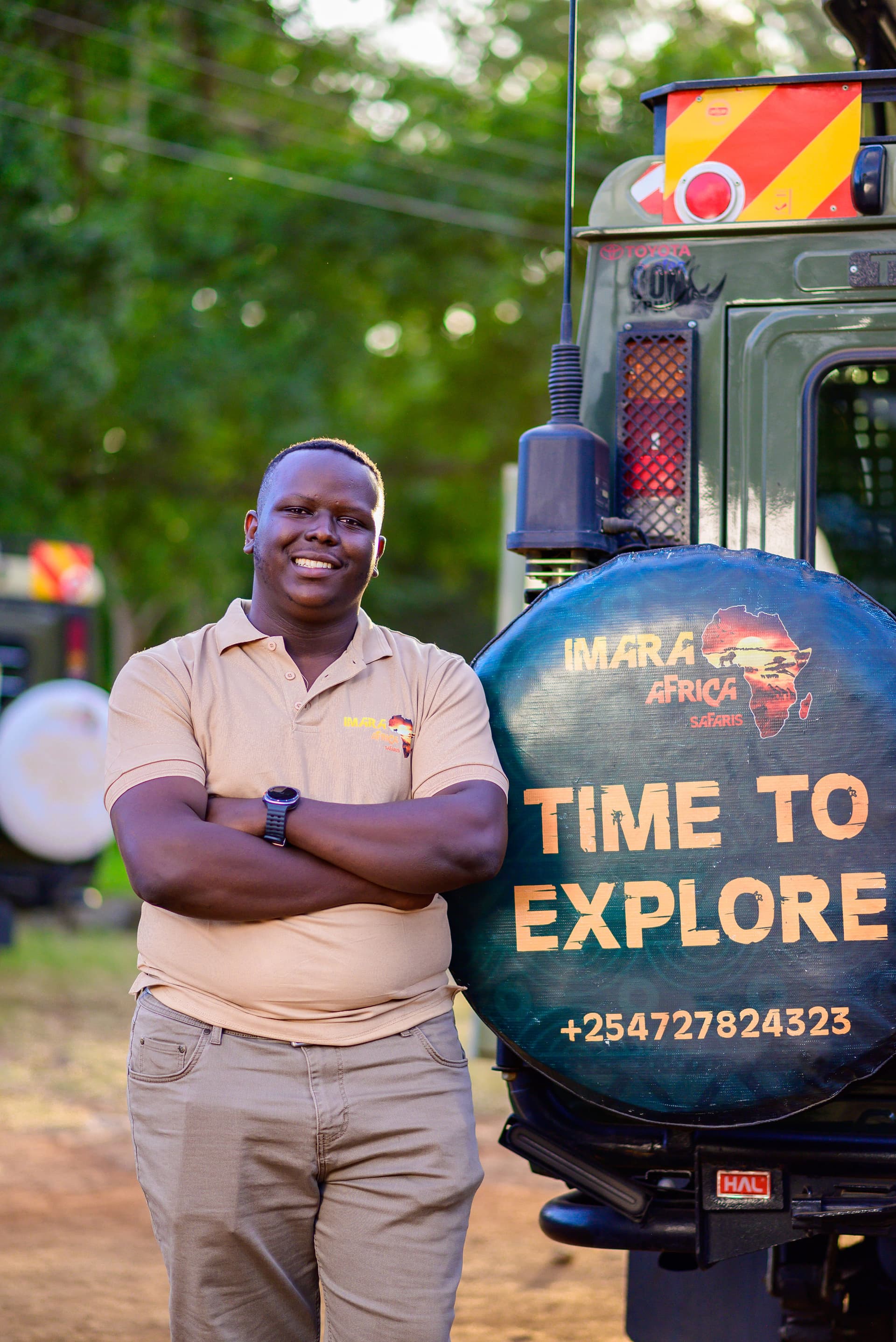
Lewis Munuhe
Founder & Director
Lewis founded Imara Africa Safaris with a vision to share the magic of East Africa with the world while supporting local communities and conservation. A lifelong wildlife enthusiast, he personally vets every experience offered.
Lewis Munuhe
Founder & Director
Lewis founded Imara Africa Safaris with a vision to share the magic of East Africa with the world while supporting local communities and conservation. A lifelong wildlife enthusiast, he personally vets every experience offered.
Lewis Munuhe
Founder & Director
Lewis founded Imara Africa Safaris with a vision to share the magic of East Africa with the world while supporting local communities and conservation. A lifelong wildlife enthusiast, he personally vets every experience offered.
Our trips
 Featured8d
Stories, sightings & itineraries from the field.
20°C
overcast clouds
Feels like 19° · 63% humidity
🦁Right now in the bush: Book your afternoon game drive — wildlife stirs.

Comments
Loading…